

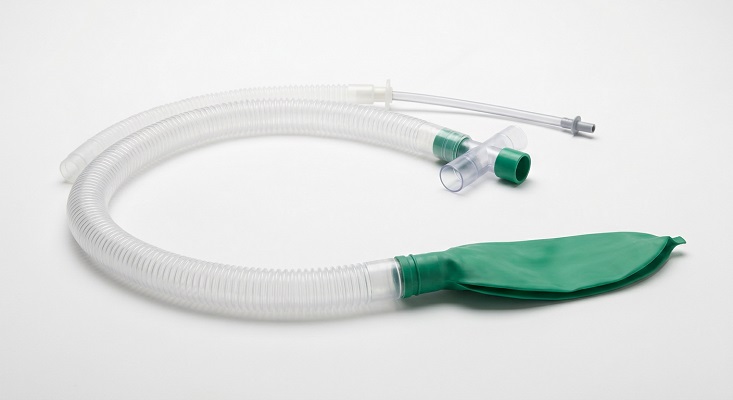
Jackson Rees Circuit in Dental Anaesthesia: Practical Control in a Confined Space
Dental anaesthesia is not performed in a wide operating theatre. It happens around a chair. Close quarters. Limited movement. Multiple hands working around one small airway.
In that setting, equipment size, weight, and resistance are not minor details. They directly affect safety and efficiency.
That is why the Jackson Rees Circuit continues to be widely used in dental sedation and nasal intubation cases, especially in paediatric patients.
The Space Problem in Dental Surgery
When a child is undergoing a dental extraction under sedation, the anaesthesiologist does not have the luxury of bulky breathing systems. The dentist needs direct access to the oral cavity. The assistant needs room for suction and instruments. The airway setup must stay stable without getting in the way.
The Jackson Rees system, also known as a Mapleson F circuit, is compact and lightweight. Its simple configuration allows it to sit comfortably within the limited “airway real estate” available in dental settings.
Being a valveless circuit, it offers low resistance to breathing. That matters in spontaneous ventilation, which is common in short dental procedures. Reduced resistance lowers the work of breathing, which is particularly important in children with smaller lung capacity.
Clinics sourcing from a reliable Jackson Rees Circuit manufacturer in India often look for these exact characteristics: low dead space, consistent flow, and dependable materials.
Why Low Resistance Is Critical in Paediatric Cases
Children under 20 kg have limited respiratory reserves. Even small increases in circuit resistance can lead to fatigue.
A properly designed paediatric anaesthesia breathing circuit must minimise turbulence and maintain smooth gas flow. The Jackson Rees design achieves this through its uncomplicated pathway and absence of mechanical valves that might stick or malfunction.
Low-resistance paediatric anaesthesia setups are not about comfort alone. They reduce risk. They support stable ventilation during dental sedation.
For this reason, many dental centres actively search for a trusted paediatric anaesthesia breathing circuit supplier rather than relying on generic options. Consistency in tubing quality and reservoir bag compliance plays a direct role in clinical confidence.
Nasal Intubation Without Tension
Nasal intubation is common in dental anaesthesia because it clears the oral cavity for surgical access. However, nasal endotracheal tubes can be sensitive to traction.
If the breathing circuit is heavy or rigid, even slight movement can transmit force to the nasal tube. That increases the chance of displacement or patient discomfort.
A lightweight Jackson Rees circuit reduces drag. It allows controlled head rotation during complex dental procedures without stressing the airway.
This practical benefit is one reason dental anaesthesiologists continue to favour the design. The circuit moves naturally with the patient rather than resisting repositioning.
Manufacturers who understand these nuances do not just produce tubing. A dependable Jackson Rees Circuit manufacturer in India focuses on material flexibility, smooth internal surfaces, and predictable performance.
The Reservoir Bag as a Clinical Tool
In office-based dental sedation, the reservoir bag is more than a component. It provides real-time tactile feedback.
An experienced anaesthesiologist can sense changes in lung compliance through the bag before monitors show variation. Partial obstruction, bronchospasm, or altered ventilation often first appear as a subtle change in “feel”.
For that reason, compliance balance is important. The bag should not be overly stiff or excessively flimsy. A well-engineered antistatic reservoir bag gives accurate hand feedback.
This is where choosing the right paediatric anaesthesia breathing circuit supplier becomes important. Material quality influences tactile response and reliability.
Sterility and Workflow in Dental Clinics
Dental practices working with sedation often manage high patient turnover. Equipment must be sterile, ready to use, and consistent from case to case.
Single-use, EO gas sterile circuits reduce cross-contamination risk and remove the need for reprocessing. Reliable supply chains ensure that clinics never compromise on fresh supplies due to stock shortages.
Omex Medical Technology, as an established Jackson Rees Circuit manufacturer in India, has built its presence on manufacturing stability, quality control, and timely delivery rather than excessive branding claims. With decades of experience in medical disposables, the focus remains on dependable anaesthesia and respiratory care products that perform predictably in real-world conditions.
A Practical Choice for Modern Dental Anaesthesia
The Jackson Rees Circuit remains relevant because it fits the realities of dental practice.
It is compact.
It supports low-resistance paediatric ventilation.
It protects nasal intubation stability.
It offers valuable tactile monitoring.
For clinics seeking a reliable paediatric anaesthesia breathing circuit supplier, choosing a manufacturer that understands both clinical precision and production quality is essential.
In the close working environment of a dental chair, simplicity backed by strong manufacturing standards continues to be the safest path forward.
