

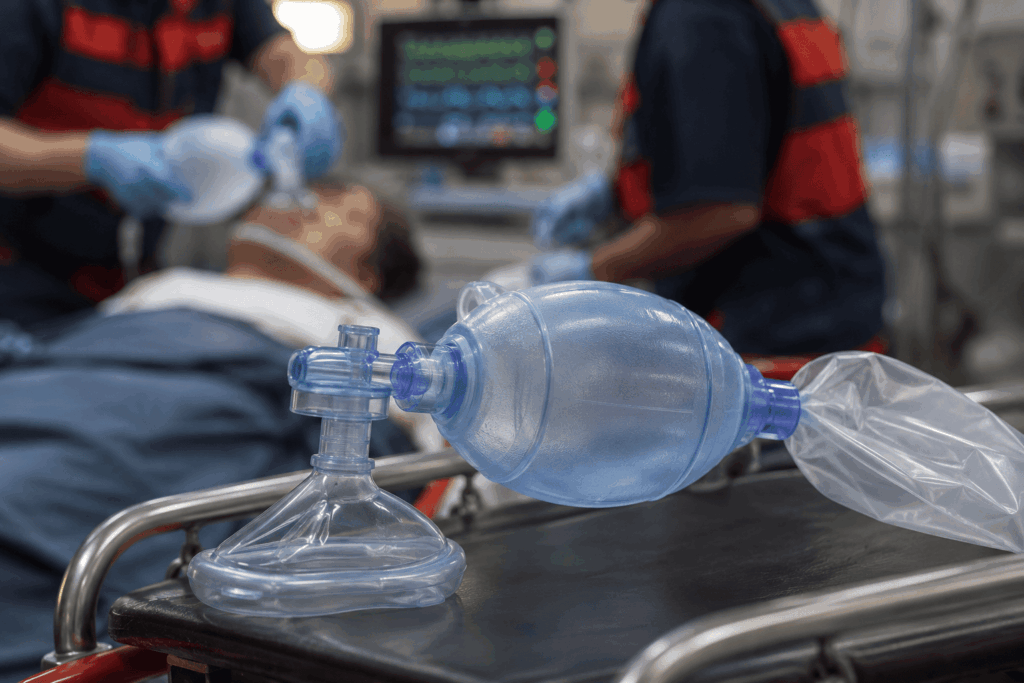
Could the Next Generation of Resuscitation Bags Change Emergency Care Beyond the Ambulance?
Most people picture a resuscitation bag in the back of an ambulance, paramedics working over someone on a gurney. That picture’s out of date. Walk through a hospital today, and you’ll find the same device tucked into an anaesthetic trolley in theatre, clipped to a crash cart in the neonatal ICU, or sitting ready in a recovery bay, doing work that has nothing to do with pre-hospital transport at all.
That shift didn’t happen by accident. Anaesthesia teams, emergency medicine and critical care have all leaned harder on manual ventilation over the past few years, and the device itself has had to catch up. A bag that only needs to work well for the ten-minute ride to hospital is a different design problem than one that gets picked up dozens of times a shift across a busy ICU.
So manufacturers have gone back to first principles. Infection prevention, how a bag feels in the hand after the fifth or sixth squeeze, how portable it is, how reliably it performs. Hospitals expect more on every one of those fronts than they did even five years ago, and the resuscitation bag has quietly turned into something built around clinician confidence and patient safety across an entire care journey, not just the worst five minutes of it.
Quick Summary
- Resuscitation bags keep improving across ergonomics, infection control, materials and respiratory performance.
- Their use has spread well past ambulances into operating theatres, ICUs, emergency departments, recovery units and intra-hospital transport.
- Durability, consistency and ease of use now weigh more heavily in purchasing decisions than they used to.
Why Are Resuscitation Bags Becoming More Important Across Modern Healthcare?
Emergency care used to feel centralised, mostly happening in one part of the hospital. That’s not really true anymore. Critical interventions crop up everywhere now, not just behind the doors marked emergency department.
A clinician might reach for manual ventilation during anaesthetic induction, recovery from surgery, an intensive care procedure, emergency airway management, a transfer between departments, neonatal or paediatric care, a cardiac arrest response, or during disaster and mass casualty response.
Because that need shows up in so many corners of a hospital, procurement has shifted toward devices that hold up reliably across most of them, rather than buying something purpose-built for a single environment.
The Modern Resuscitation Bag Is Designed for More Than Ventilation
Squeeze a bag, watch the chest rise. Sounds simple enough on paper. Keeping a steady tidal volume while holding an airway secure through a long emergency is a different story physically, and it wears clinicians down fast.
Ergonomic squeeze performance
Better bag geometry cuts hand fatigue during long stretches of ventilation, which matters most when a clinician’s holding respiratory support for several minutes before a mechanical ventilator becomes available.
Better grip surfaces
Textured exteriors hold up better under gloved hands, especially once things start moving fast.
Faster clinical readiness
A lot of newer bags arrive preassembled or need almost no setup, shaving off the seconds that matter during an emergency response.
Improved oxygen delivery
Better valve systems and reservoir integration mean clinicians can push higher oxygen concentrations without a fight.
Taken together, none of these is dramatic on their own, but they add up to clinicians spending more attention on the patient and less fighting with the equipment.
Material Innovation Is Supporting Better Infection Prevention
Hospital-acquired infections haven’t gone away as a concern anywhere in the world, and that’s pushing respiratory device design in a particular direction. Clinical performance still matters most, sure, but how well a device supports cleaning and infection control has become just as central to how it gets built.
Some of what’s changed: medical-grade materials with better durability, latex-free builds where appropriate, components that are easier to clean, disposable patient interfaces, reduced dead space in certain designs, and manufacturing processes built around consistency rather than one good batch followed by a shaky one.
For procurement teams, this translates fairly directly into lower contamination risk, all while staying within the infection prevention rules a hospital already runs on.
How the Rebreathing Bag Continues to Support Anaesthesia Care
A rebreathing bag isn’t an emergency device the way a resuscitation bag is. It lives inside an anaesthesia circuit and does something different entirely.
Anaesthetists lean on it to watch changes in lung compliance, assist spontaneous ventilation, deliver controlled manual ventilation, gauge respiratory resistance, and support a patient through induction and emergence.
Plenty of newer technology has come along since, but the rebreathing bag hasn’t lost its footing in theatre. There’s a reason for that. It gives anaesthetists tactile feedback that no monitor fully replaces, and manufacturers keep refining the materials and flexibility behind it to hold up through longer procedures.
Portability Is Expanding Clinical Applications
Healthcare has become a fairly mobile business. Patients move constantly between emergency departments, radiology, intensive care, cardiac catheterisation labs, operating theatres, recovery rooms, and inter-hospital transport.
A portable resuscitation bag means manual ventilation is close at hand no matter where a patient starts to deteriorate, instead of clinicians running back to a central store when seconds matter most.
That same flexibility feeds emergency preparedness too, letting facilities spread respiratory equipment across departments instead of keeping it all in one place and hoping nothing goes wrong somewhere else at the same time.
Better Human Factors Are Improving Clinical Confidence
Nobody’s flipping through an instruction manual mid-resuscitation. Emergency clinicians work off muscle memory, familiarity, and equipment that feels intuitive under stress, not written guidance.
That’s why manufacturers keep tightening up things like consistent squeeze resistance, clear component identification, simplified assembly, secure mask connections, reliable valve performance, and easy portability.
None of these looks like much individually. Put them together across a stressful resuscitation, and the difference in workflow is real.
Procurement Teams Are Looking Beyond Purchase Price
Hospital purchasing has become more evidence-driven over time, and upfront cost rarely decides things on its own anymore.
Decision-makers weigh clinical performance, manufacturing quality systems, regulatory compliance, product consistency, how available a device is across its range, supply chain reliability, how easy staff training turns out to be, and lifecycle costs.
Choosing the right respiratory device usually comes down to balancing what clinicians need against what keeps procurement running smoothly over the long haul.
Respiratory Care Is Becoming More Integrated
Sourcing respiratory equipment from a single trusted manufacturer, instead of juggling several suppliers per department, has become the preferred route for a lot of hospitals.
That integrated approach tends to span manual resuscitation devices, anaesthesia accessories, breathing circuits, oxygen therapy products, and airway management consumables.
For biomedical distributors and procurement teams, a broader portfolio like that usually means smoother purchasing and steadier product availability. Healthcare providers looking to upgrade their respiratory equipment can explore Omex Medical Technology’s anaesthesia and respiratory care portfolio, built to support emergency medicine, operating theatres and critical care environments.
What Could the Next Generation Bring?
Manual ventilation devices are heading toward lighter, more ergonomic builds that work better alongside modern respiratory care systems, without losing sight of patient safety.
Watch for more sustainable medical materials, better portability for emergency response, tighter compatibility with monitoring systems, continued ergonomic refinement, stronger manufacturing quality control, and more standardisation across facilities.
Manual ventilation will always depend on clinician skill first, no device changes that fact. But thoughtful design keeps making the moments around that skill faster and steadier.
The Bottom Line
Emergency medicine doesn’t sit inside ambulances and emergency departments anymore. Critical respiratory moments happen across hospitals, surgical centres and ICUs, and equipment now needs to hold up wherever it’s called on.
As infection prevention, portability, ergonomics and product quality keep climbing hospital priority lists, the resuscitation bag has turned into a more sophisticated piece of kit than it used to be. The rebreathing bag hasn’t gone anywhere either, still doing essential work in anaesthesia, and together they’re a decent reminder that innovation keeps benefiting both emergency and planned patient care.
About Omex Medical Technology
Omex Medical Technology develops medical devices supporting healthcare professionals across anaesthesia, respiratory care and other critical clinical areas. With a strong focus on manufacturing quality and dependable performance, the company supplies healthcare providers and distributors with solutions built for demanding clinical environments.
Explore the range to see how dependable respiratory solutions can strengthen patient care across every stage of treatment.
Frequently Asked Questions
- What is a resuscitation bag used for?
It’s a manually operated ventilation device that delivers positive pressure ventilation to patients who aren’t breathing well on their own, or who need respiratory support during an emergency, anaesthesia or critical care.
- Where is a resuscitation bag commonly used?
Ambulances are still where people expect to find one, but resuscitation bags now show up just as often in emergency departments, operating theatres, ICUs, recovery areas, neonatal units, and during transport between departments.
- How does a rebreathing bag differ from a resuscitation bag?
A rebreathing bag sits inside an anaesthesia breathing circuit and mainly helps assist manual ventilation and monitor respiratory mechanics during surgery. A resuscitation bag is built for emergency manual ventilation, working independently of any anaesthesia circuit.
- What features should hospitals consider when purchasing a manual ventilation device?
Procurement teams typically look at manufacturing quality, ergonomic design, infection control features, material durability, compatibility with existing respiratory systems, regulatory compliance, and overall lifecycle value.
- Why are infection control features important in modern respiratory equipment?
These devices come into close contact with patients constantly during emergency care. Materials that clean effectively, appropriate single-patient use where it matters, and consistent manufacturing quality all help hospitals stay ahead on infection prevention.
- Can one resuscitation bag support multiple hospital departments?
Plenty of modern resuscitation bags are built to work across emergency departments, operating theatres, ICUs, recovery units and transport teams, which helps hospitals standardise respiratory equipment while keeping emergency preparedness consistent.
Disclaimer: Any surgical or invasive procedure carries risks. Before proceeding, seek a second opinion from an appropriately qualified health practitioner.
