

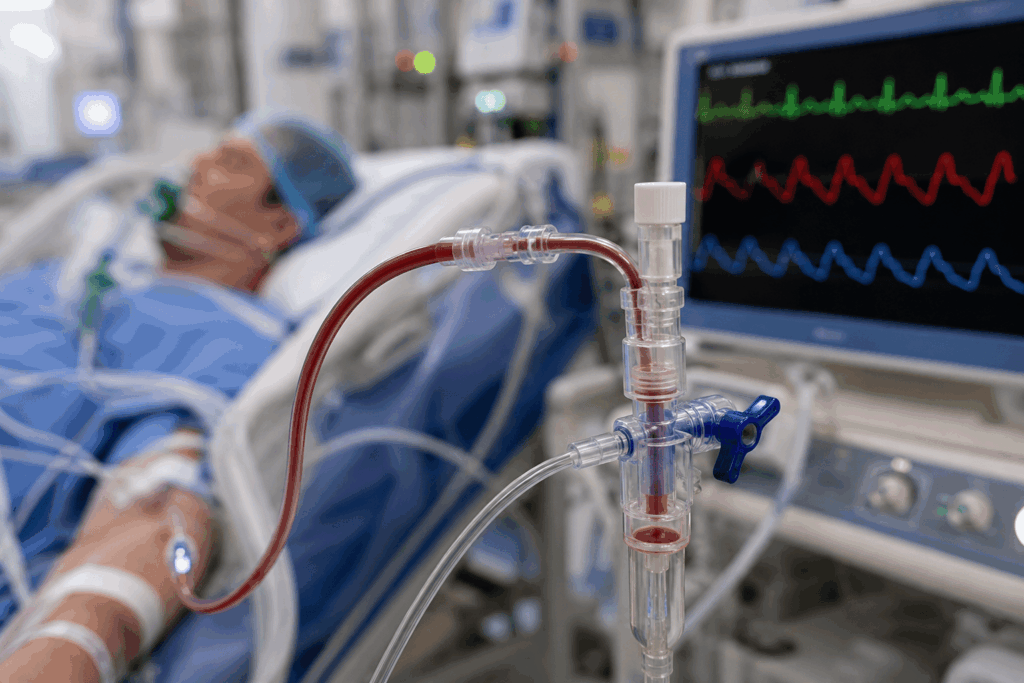
How High Pressure Monitoring Lines Improve Accuracy in Critical Care Settings
The ICU monitor beeps. The patient’s blood pressure is crashing. The team moves fast, and the arterial line is already in place. But here is the question that separates a good outcome from a bad one. Is that waveform accurate, or is it being dampened by a faulty connection?
Critical care clinicians know this moment too well. The difference between a true reading and an artifact can change everything. This is where a high pressure monitoring line becomes more than just another piece of tubing. It becomes the difference between life and death decisions.
What Exactly Is a High Pressure Monitoring Line?
A high pressure monitoring line is a specialised pressure tubing system designed to transmit accurate hemodynamic pressures from the patient to the monitoring equipment. Unlike standard IV tubing, these lines are built to withstand high pressures without compromising waveform fidelity.
The internal lumen is smooth and non-compliant. This means it does not expand or contract with pressure changes. The result is a faithful transmission of the pressure waveform from the arterial catheter to the transducer.
Why Standard Tubing Fails in Critical Care
Standard IV tubing was never designed for pressure monitoring. The walls are too compliant. When pressure pulses travel through regular tubing, the walls expand slightly with each heartbeat. This expansion absorbs some of the pressure energy and distorts the waveform.
Think about it this way. You are trying to listen to a faint whisper through a flimsy paper cup. The sound gets muffled. Important details get lost. That is exactly what happens with standard tubing in arterial monitoring.
The clinical implications are serious:
- A dampened waveform makes the systolic pressure appear lower than it actually is
- The diastolic pressure may seem higher than the true value
- The mean arterial pressure, which guides so many critical decisions, becomes unreliable
- Clinicians end up treating numbers that are not real, which is a scary thought when the patient is unstable
The Mechanics of Accurate Pressure Transmission
A high pressure monitoring line solves this problem through smart engineering. The tubing is made from materials with minimal compliance. Polyurethane and specially formulated PVC are common choices. The wall thickness is carefully calculated to resist expansion under normal arterial pressures.
The internal diameter is also optimised. Too narrow, and the resistance affects the waveform. Too wide, and the fluid column becomes sluggish. The high pressure monitoring line strikes the right balance to ensure rapid, accurate pressure transmission.
Critical Components of a High Pressure Monitoring Line
| Component | Function | Why It Matters |
| Non-compliant tubing | Maintains pressure waveform integrity | Prevents dampening and distortion |
| Flush device | Maintains patency with continuous slow flow | Keeps the line open without interfering with readings |
| Transducer interface | Connects to the pressure transducer | Ensures accurate signal transmission |
| Stopcocks | Allows sampling and zeroing | Facilitates calibration and blood draws |
| Pressure bag | Maintains 300 mmHg pressure in flush solution | Prevents backflow and keeps the line patent |
Clinical Scenarios Where Accuracy Is Non-Negotiable
The high pressure monitoring line proves its worth in several high-stakes situations. Experienced critical care nurses can tell you exactly where these lines become indispensable.
- Haemodynamic Instability: When a patient is on multiple vasopressors, every millimetre of mercury counts. The high pressure monitoring line ensures that the displayed pressures are real. This allows the team to titrate medications with confidence rather than guessing.
- Trauma Resuscitation: Rapid decision-making demands immediate feedback. The high pressure monitoring line shows how the patient is responding to fluid and blood products in real time. A true waveform tells you whether the patient is improving or deteriorating right now.
- Post-Operative Cardiac Patients: These patients require meticulous pressure monitoring. The high pressure monitoring line gives the surgical team accurate readings without the interference that standard tubing introduces. This is particularly important when weaning patients off bypass support.
- Neurological Critical Care: Arterial pressure monitoring calculates cerebral perfusion pressure. This is the difference between mean arterial pressure and intracranial pressure. A small error in the arterial pressure reading can lead to incorrect treatment decisions that harm the brain.
The Waveform Is the Story
Nurses and physicians who work in intensive care learn to read the waveform itself. The shape of the pressure tracing tells them whether the reading is valid.
A high pressure monitoring line gives you waveforms that look like this:
- A crisp, sharp upstroke
- A distinct dicrotic notch
- Clear, defined systolic and diastolic peaks
- No rounding or sluggishness
When the waveform looks lazy, the numbers cannot be trusted. The high pressure monitoring line preserves these waveform characteristics. The tubing itself does not introduce artefacts. The clinician can trust what they see on the screen.
One veteran ICU nurse put it bluntly. “If the waveform looks lazy, I do not trust the numbers. I check the line, check the connections, and often find the problem is the tubing itself. Switching to a high pressure line fixes it every time.”
Artefacts and How High Pressure Lines Prevent Them
Several common artefacts plague pressure monitoring. The high pressure monitoring line eliminates many of these headaches.
Catheter Whip happens when the catheter moves within the artery. This creates a chaotic waveform. The high pressure monitoring line does not correct the catheter movement, but it transmits the resulting pressures faithfully. The clinician can then distinguish between true pressure changes and motion artefact.
Air Bubbles in the line cause high-frequency artefacts. The high pressure monitoring line is designed to facilitate bubble clearance. The smooth lumen and proper connections minimise the places where air can hide.
Clot Formation at the catheter tip changes the waveform. The continuous flush from the high pressure monitoring line reduces this risk. The flush system keeps a slow, steady flow of heparinised saline moving through the line.
The Cost of Inaccurate Monitoring
Consider the consequences of a wrong pressure reading:
- Over-treating a patient who looks hypertensive but is normotensive
- Failing to escalate care in a patient who appears stable but is hypotensive
- Making incorrect medication titration decisions
- Prolonging ICU stays and increasing hospital costs
- Causing preventable patient harm
These are not theoretical risks. They happen every day when monitoring systems are compromised.
The high pressure monitoring line costs more than standard tubing. However, what does a preventable ICU complication cost? Extended ventilation, increased vasopressor use, longer ICU stays, and higher mortality. The cost of the monitoring line becomes insignificant compared to the cost of inaccurate data.
Workflow Benefits for Critical Care Teams
A high pressure monitoring line also improves workflow efficiency:
- The flush system allows quick clearing of the line after blood sampling
- Stopcocks provide easy access for zeroing and calibration
- Nurses spend less time troubleshooting dampened waveforms
- The team can focus on patient assessment and treatment rather than chasing artefacts
- Reliable data supports confident clinical decisions
Maintaining Accuracy with High Pressure Monitoring Lines
Proper setup and maintenance are essential for accurate readings:
- The high pressure monitoring line must be zeroed to atmosphere before connection
- This establishes the baseline pressure reference point
- The flush system should be maintained at 300 mmHg using a pressure bag
- This ensures a continuous flow of 2 to 4 mL per hour through the catheter
- This low flow keeps the line patent without interfering with the pressure reading
- Regular square wave testing confirms the accuracy of the system
- A quick flush produces a characteristic waveform
- A sharp upstroke followed by a rapid return to baseline indicates proper function
What the Evidence Shows
Clinical studies consistently demonstrate that high pressure monitoring lines provide more accurate pressure readings than standard tubing. The difference in systolic pressure measurement can exceed 10 mmHg between compliant and non-compliant systems.
This difference matters clinically. A 10 mmHg error in systolic pressure can influence decisions about fluid administration, vasopressor titration, and overall treatment strategies. The high pressure monitoring line eliminates this variable and gives clinicians confidence in their data.
The Final Word
High pressure monitoring lines are not a luxury. They are a necessity in any setting where accurate haemodynamic monitoring matters. The tubing itself is the foundation of the monitoring system. If the foundation is compromised, everything built on top of it becomes suspect.
Critical care teams deserve accurate data. Patients deserve treatment based on real numbers. The high pressure monitoring line delivers both.
Choose the high pressure monitoring line for every arterial line. The waveform you save could be the patient you save.
At Omex Medical Technology, we engineer our high pressure monitoring lines with the critical care environment in mind. Our products feature non-compliant tubing, reliable flush systems, and precise connections that support accurate pressure monitoring. We understand that clinicians need equipment that works when the situation is at its most intense.
Explore our high pressure monitoring line collection and give your team the accuracy they need for better patient outcomes.
Frequently Asked Questions
- What is a high pressure monitoring line used for?
A high pressure monitoring line is used to accurately transmit arterial blood pressure readings from the patient to the monitoring equipment in critical care settings. It ensures that the waveform displayed on the monitor is a faithful representation of the patient’s actual haemodynamic status. - How does a high pressure monitoring line differ from standard IV tubing?
Unlike standard IV tubing, a high pressure monitoring line is made from non-compliant materials that resist expansion under pressure. This prevents waveform dampening and ensures that the systolic, diastolic, and mean arterial pressures displayed are accurate. - What is the square wave test for a high pressure monitoring line?
The square wave test involves performing a quick flush on the high pressure monitoring line. A sharp upstroke followed by a rapid return to baseline indicates the system is working correctly. A dampened or sluggish response suggests a problem with the line or the connection. - How often should a high pressure monitoring line be zeroed?
A high pressure monitoring line should be zeroed at least once per shift and whenever the patient is repositioned significantly. Zeroing establishes the atmospheric pressure reference point and ensures accurate readings. - Can a high pressure monitoring line be used for other purposes?
While primarily designed for arterial pressure monitoring, a high pressure monitoring line can also be used for central venous pressure monitoring and other haemodynamic measurements that require accurate pressure transmission. - What are the common complications associated with high pressure monitoring lines?
Common complications include infection, thrombosis, and accidental disconnection. However, proper insertion techniques, sterile maintenance, and the use of secure connections minimise these risks significantly.
