

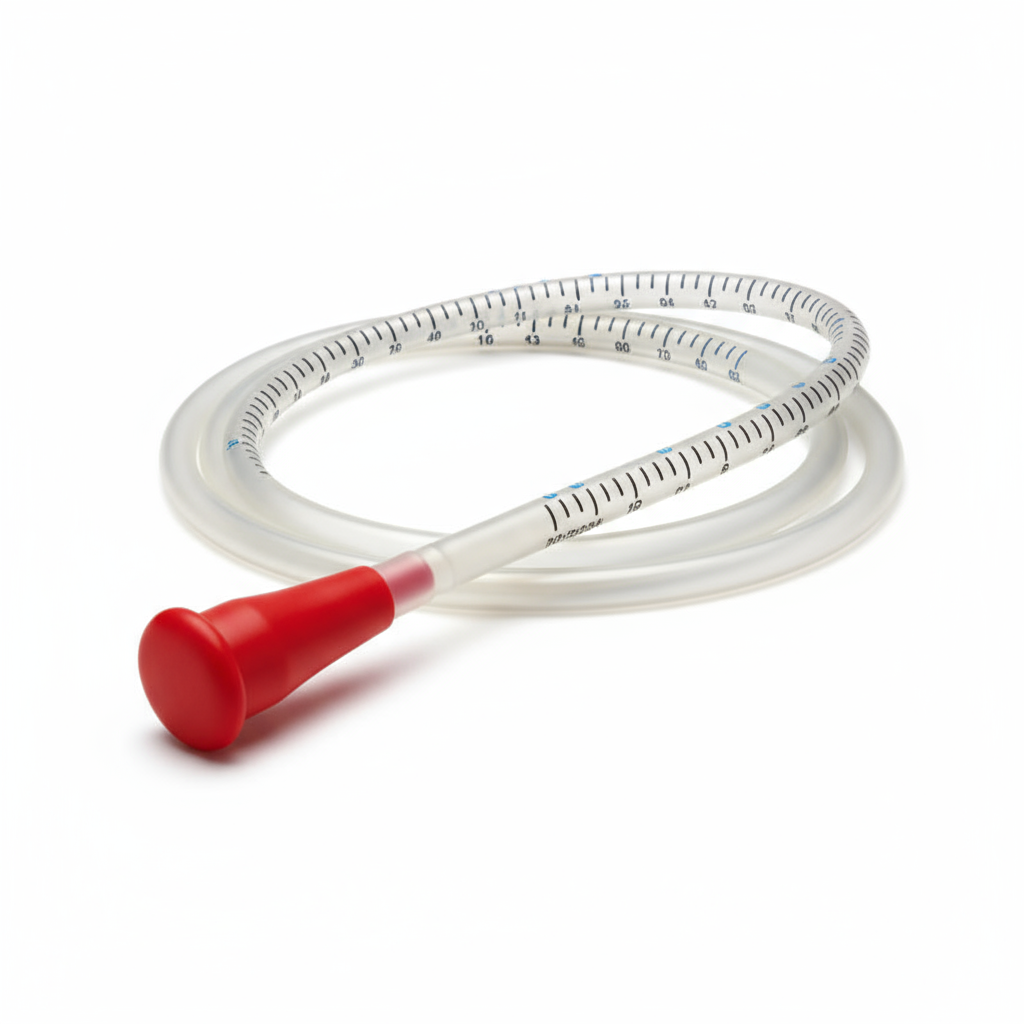
Levin’s Tube: An Essential Gastroenterology Medical Device
Levin’s tube is a single-lumen nasogastric tube used for short-term gastric decompression, aspiration of gastric secretions, and enteral feeding when oral intake is not possible or not advisable in clinical settings. For institutional buyers in India, it remains a high-turnover, essential consumable across emergency, critical care, perioperative, and general medicine units due to its versatility and established safety practices for placement verification and bedside use.
What a Levin’s tube is
A Levin’s tube is a flexible nasogastric catheter inserted via the nares into the stomach for drainage, aspiration, medication delivery, or feeding support in patients unable to tolerate oral intake. It is a mainstay in managing bowel obstruction, ileus, upper gastrointestinal bleeding monitoring, and short-term enteral nutrition in hospital pathways.
Core clinical uses
- Gastric decompression in suspected or confirmed intestinal obstruction or postoperative ileus to relieve distension and reduce aspiration risk.
- Aspiration and monitoring of gastric contents in acute care, including preoperative and ICU protocols when gastric stasis complicates respiratory or haemodynamic management.
- Short-term enteral feeding or medication administration where oral intake is unsafe or insufficient, with placement safety confirmed before use.
Safety and placement verification
Before initiating feeding or aspiration, the current safety practice is to confirm tube position by aspirating gastric contents and testing pH, using radiography only when pH confirmation is inconclusive or aspiration cannot be obtained. Clinical protocols direct rechecking position at key points: immediately post-insertion, before each feed or medication, after episodes of vomiting or coughing, with any respiratory symptoms, and at least daily during continuous feeds. These checks reduce the risk of pulmonary misplacement and are integral to procurement value, as tubes designed with radiopaque lines and clear depth markings support accurate verification and documentation.
Why is it standard across departments?
Levin’s tubes enable rapid, low-complexity interventions that stabilise patients while definitive care proceeds, which is why they are widely stocked in emergency, medicine, surgery, and critical care inventories. In addition to decompression and drainage, they support nutritional continuity and medication delivery when swallowing or gastric motility is compromised, decreasing complications associated with prolonged fasting.
Regulatory context in India
Nasogastric tubes (including Levin’s and Ryle’s tubes) fall under India’s medical device regulatory framework administered by the Central Drugs Standard Control Organisation (CDSCO). CDSCO classification documents list nasogastric/Ryle’s tubes within gastroenterology devices, informing quality, safety, and compliance considerations for institutional procurement and supplier due diligence. Buyers should align purchasing with CDSCO-listed categories and ensure suppliers meet applicable Indian regulatory expectations for sterile, single-use devices.
Features institutional buyers should prioritise
- Medical-grade materials with smooth surfaces to minimise mucosal trauma and facilitate comfortable insertion and ongoing tolerance in ward settings.
- Radiopaque line along the tube for clear X‑ray visualisation when radiographic confirmation is clinically indicated or required by local policy.
- Clear external depth markings to support accurate placement estimates and reliable rechecks against baseline position during care episodes.
- Atraumatic distal design with multiple lateral eyes to improve drainage efficiency while minimising localised pressure points in the gastric lumen.
- Secure, universal proximal connectors compatible with standard enteral syringes and accessories to streamline bedside workflows and reduce connection errors.
- Sterile, single-use packaging to support infection prevention policies and eliminate reprocessing burdens in high-throughput units.
Selection and sizing guidance
Levin’s tubes are available across multiple French sizes to accommodate paediatric through adult anatomy and clinical indications, with selection guided by intended use, viscosity of aspirated contents, and patient comfort. Adult practice typically pairs moderate-bore tubes for decompression and aspiration with careful insertion depth estimation and mandatory position checks before any use. Stocking a balanced size mix supports rapid response in ED and theatre, while consistent connectors and markings simplify training and reduce variability across shifts.
Placement depth and confirmation essentials
Clinical estimation techniques aim to place the tip in the gastric body, with approximate insertion lengths guided by external measurements and confirmed by pH testing where feasible. If gastric aspirate is unobtainable or pH is not confirmatory, a chest/abdominal radiograph should be used to verify correct placement before feeding or medication administration per local policy. Documentation of the external length at the nares and the verification method used is a key safety step that should be built into ward checklists and purchasing training bundles.
Procurement checkpoints for hospitals and distributors
- Verify CDSCO alignment for nasogastric/Ryle’s tubes under gastroenterology device classification when qualifying suppliers and SKUs.
- Require packaging that maintains sterility and traceability for single-use workflows, including clear labelling of size, lot, and expiry for inventory control.
- Favour designs with radiopaque lines and legible depth markings to support compliance with placement verification protocols in wards and ICUs.
- Ensure connector compatibility with enteral syringes and accessories used across your institution to reduce adapter reliance and improve safety.
- Stock an appropriate size range for adult and paediatric pathways if serving multi-speciality facilities, balancing demand patterns with storage capacity.
Training and policy alignment
NHS Trust policies and similar evidence-based protocols emphasise pH-first verification, with X‑ray reserved for situations where pH testing is not possible or inconclusive, and they mandate rechecking at defined care points to prevent misplacement harm. Embedding these checks into staff training, ward posters, and electronic order sets reduces incident risk and aligns product features (markings, radiopacity) with daily safety practice. Including verification strips and standardised documentation prompts within supply kits can further improve adherence and audit readiness.
Clinical impact and throughput
When used appropriately, Levin’s tubes can decompress the stomach quickly, ease nausea and vomiting in obstruction, and stabilise patients while surgical or interventional plans are made, which helps shorten time-to-relief and supports bed flow. For nutrition and medication, they provide a temporary, lower-complexity route compared with parenteral options, helping maintain gut integrity while definitive feeding strategies are established. These practical advantages explain persistent, high-volume consumption in multi-speciality settings and the need for reliable supply partnerships.
Compliance and inventory strategy
Indian device oversight via CDSCO provides a framework for quality and labelling expectations, and aligning purchasing checks with that framework supports consistent, compliant stock across sites. Sterile, single-use supply with robust packaging and traceability underpins infection prevention and recall readiness, both key to institutional risk management. Building standard formulary SKUs with common connectors, clear markings, and radiopaque lines improves training efficiency and reduces variation, which is especially valuable for large hospitals and group purchasing.
Summary for wholesale buyers
For Indian hospitals, clinics, and multi-speciality networks, Levin’s tubes remain essential for decompression, aspiration, and short-term enteral access, provided their placement is verified and rechecked per protocol before any use. A procurement that focuses on CDSCO alignment, sterile single-use packaging, radiopacity, clear depth markings, and connector compatibility will support safer practice, easier training, and dependable throughput in high-demand clinical environments.
